
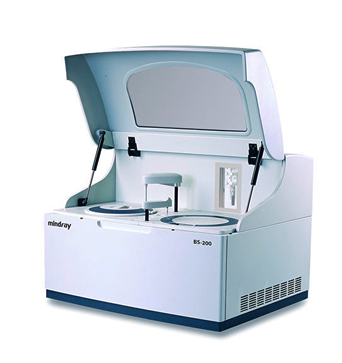
Buy a sustainable testing workflow. Test volume, consumable supply, quality control, staff capability, and the service environment should drive the shortlist before a model or headline throughput does.
Photos show example models. Your clinical and technical teams should approve the exact equipment and its current support.
Jump to equipment +
Chemistry and hematology analyzers
Start with the test menu and daily volume. Compare cost per reportable result, including reagent waste, controls, calibration, and maintenance.
How it works & what to compare
The basics
Chemistry analyzers measure substances in samples; hematology analyzers assess blood cells. Each instrument depends on its test menu, reagents, controls, calibration, and maintenance to form a working laboratory service.
Before you buy
- Ask for a complete test menu and distinguish measured throughput from headline capacity. Confirm any optional modules and accessories.
- Obtain reagent, calibrator, control, cleaner, and consumable lists with storage requirements, shelf life, minimum orders, and local supply arrangements.
- Have the laboratory team review water quality, room conditions, utilities, waste, quality-control work, training, and performance verification before acceptance.
Budget for the whole package. Compare cost per reportable result, including quality control, calibration, repeats, reagent waste, service, and staff time. Open-reagent claims still require method validation and local laboratory approval.
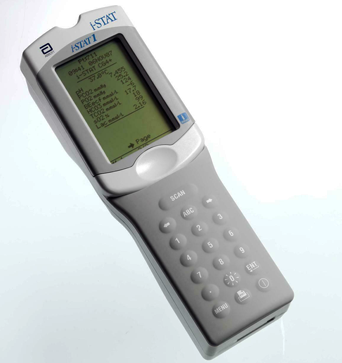
Cartridge and point-of-care analyzers
Compare cartridge supply, expiry, and cost per usable panel. A compact analyzer still needs a sustainable testing and quality-control program.
How it works & what to compare
The basics
Point-of-care analyzers bring selected tests closer to the patient. Many use cartridges containing the materials for a particular test or panel. Cartridge supply, storage, and quality control are as important as the reader.
Before you buy
- Verify that the exact cartridge and analyzer combination supports the tests and specimen types your team needs.
- Check refrigerated and room-temperature storage limits for each cartridge. Do not apply one cartridge’s shelf-life rules to the entire range.
- Include quality-control materials, operator training, connectivity, maintenance, and the process for reviewing results in the purchase plan.
Budget for the whole package. Calculate cost per usable panel after expiry, quality-control use, and repeats. Request remaining shelf life at delivery and a dependable replenishment route.
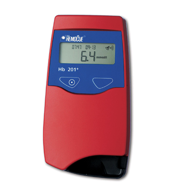
Hemoglobin, glucose, and urine testing
Choose the device and its consumables together. Pack sizes, opened-container life, and local resupply can determine whether a low-cost reader is practical.
How it works & what to compare
The basics
Hemoglobin readers, glucose meters, and urine analyzers answer different testing questions. Each uses specified sample types and consumables. A low-cost reader still needs a dependable supply of the correct tests and controls.
Before you buy
- Request the correct consumable part numbers and current instructions for storage, humidity, opened-container life, and expiry.
- Have the laboratory or clinical team confirm suitability for the intended population and specimen. Similar-looking strips or cuvettes are not interchangeable.
- Include control materials, sampling supplies, cleaning, batteries or power supplies, and an acceptance demonstration using the approved process.
Budget for the whole package. Compare complete testing costs and the smallest practical pack size. Individual packaging may reduce wastage where workload is low or environmental control is difficult.
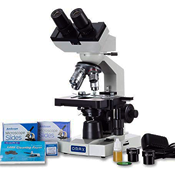
Microscopes and centrifuges
Match microscope optics to your methods. For centrifuges, specify tubes, rotor, required centrifugal force, and temperature—not RPM alone.
How it works & what to compare
The basics
A microscope magnifies a prepared specimen. A centrifuge spins samples to separate their components. For centrifuges, the force applied to the sample depends on the rotor as well as its speed.
Before you buy
- For microscopes, ask for an optical-condition inspection and a demonstration using the laboratory’s representative material and trained staff.
- For centrifuges, identify the exact rotor and adapters. RPM alone does not establish equivalent separation performance between different rotors.
- Request rotor condition and service records, lid and safety-interlock checks, and the manufacturer’s applicable service-life limits.
Budget for the whole package. Include rotors, buckets, adapters, replacement illumination, and service. A low-priced centrifuge without the correct rotor can become the more expensive purchase.
Histology and specimen preparation
Plan the complete specimen workflow, from preparation to review. Processing, sectioning, staining, ventilation, and consumables all belong in the budget.
How it works & what to compare
The basics
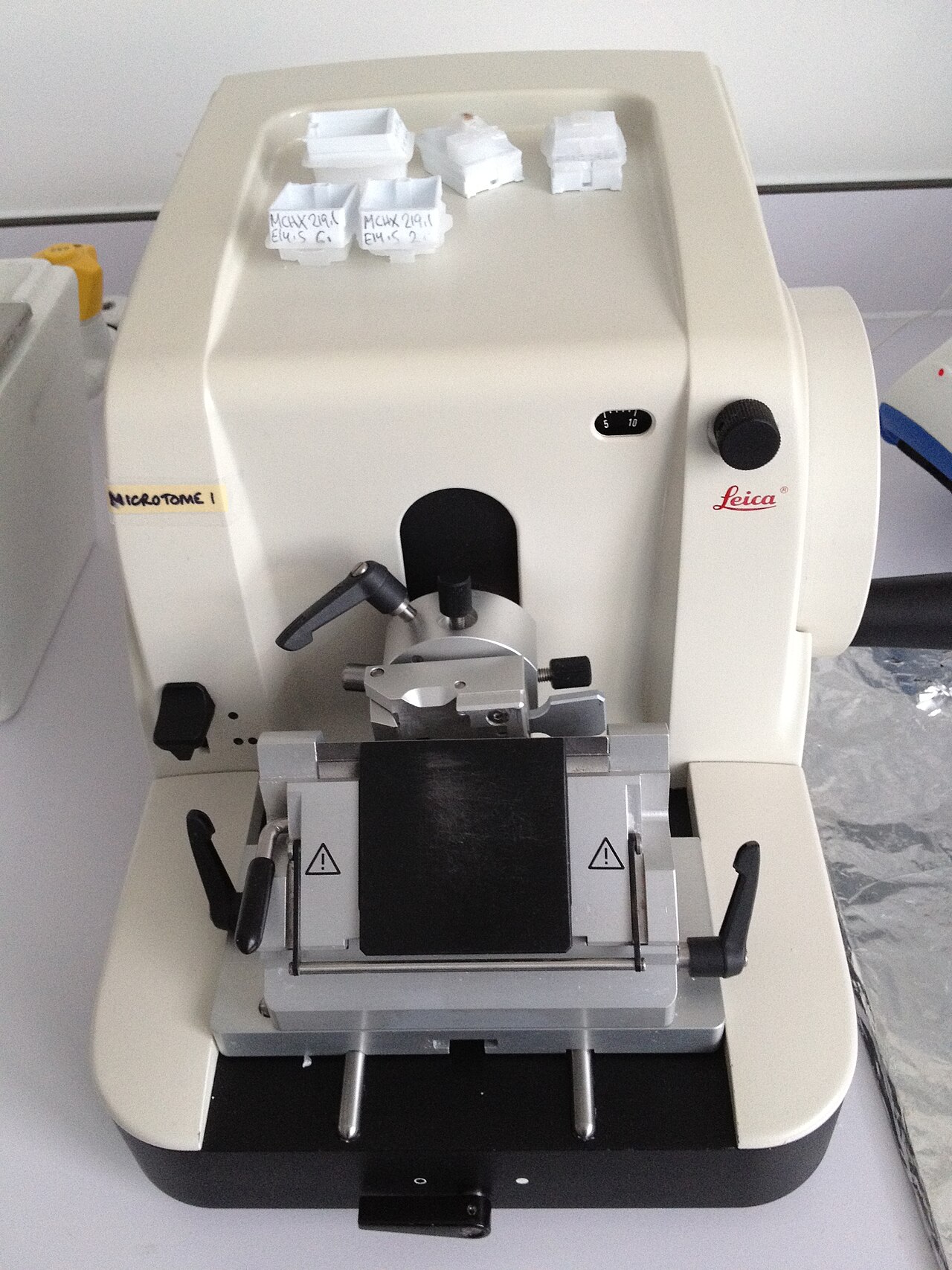
Histology prepares tissue for examination. Processing, embedding, sectioning, and staining are linked steps, often using different instruments. A microtome cuts thin sections; it does not replace the rest of the preparation workflow.
Before you buy
- Confirm the required specimen types, processing volumes, sectioning needs, and compatible blades, holders, cassettes, and molds.
- Request mechanical and functional assessment of used equipment and a demonstration appropriate to the laboratory’s work.
- Include reagent handling, ventilation and waste planning, preventive maintenance, and training in the project budget.
Budget for the whole package. Price the complete workflow and its recurring reagents and consumables. Assign responsibility for installation and performance verification before the laboratory accepts the system.
Retinal cameras, slit lamps, and tonometers
Build a complete examination package. Retinal imaging, slit-lamp examination, and pressure measurement require different accessories and support.
How it works & what to compare
The basics
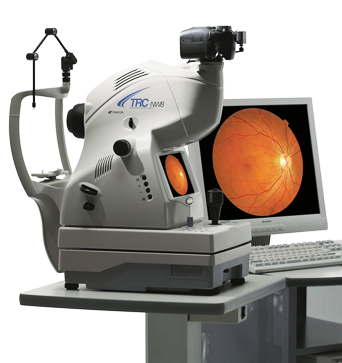
A retinal camera captures images of the back of the eye. A slit lamp supports a magnified eye examination, and a tonometer measures eye pressure. They perform different jobs and need different accessories.
Before you buy
- For retinal imaging, verify camera, computer, software licenses, export formats, and support. An older camera body may need additional capture hardware.
- For a slit lamp, check the optics, movement, illumination, table or mount, and any specified accessories with the eye-care team.
- For tonometry, confirm probe or tip compatibility and the manufacturer’s cleaning or single-use requirements. Include recurring supplies in every comparison.
Budget for the whole package. Ask for a complete, demonstrated package. Consider replacement probes, software, camera adapters, service, and transport protection alongside the equipment price.
Your quote checklist
- Test menu, patient population, and realistic daily volume
- Reagents, controls, calibrators, and shelf life
- Room conditions, utilities, and local replenishment
- Training, verification, and ongoing laboratory oversight
References reviewed October 2, 2026.