
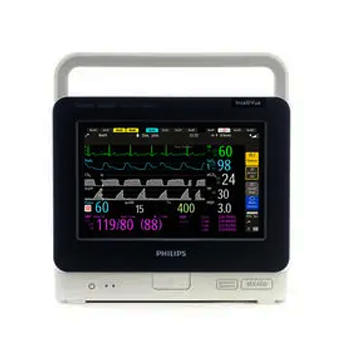
Match each device to the intended patient group and care setting. Look closely at batteries, optional modules, compatible consumables, alarm functionality, and the people who will maintain the equipment.
Photos show example models. Your clinical and technical teams should approve the exact equipment and its current support.
Jump to equipment +
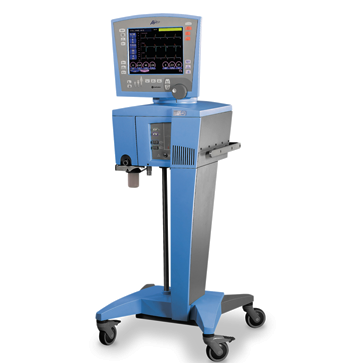
Ventilators and respiratory support
Match patient groups and ventilation modes first, then verify gas supply, batteries, sensors, and enabled options on the offered unit.
How it works & what to compare
The basics
A ventilator supports breathing by delivering controlled breaths or assisting a patient’s own breathing. Models differ in patient groups, modes, gas requirements, and portability. The clinical team should define the specification.
Before you buy
- Verify whether neonatal capabilities, noninvasive ventilation, CO₂ monitoring, and other requested functions are included, optional, or unavailable on the exact unit.
- Confirm whether the system requires compressed air or uses a turbine, and separately establish its oxygen requirements. A turbine does not generate oxygen.
- Request documented testing, battery assessment, alarm checks, service history, and the compatible circuit, sensor, and filter list.
Budget for the whole package. Include batteries, sensors, circuits, humidification, gas supply, staff training, and planned maintenance. Ask for a written parts-support horizon and check model-specific notices before purchase.
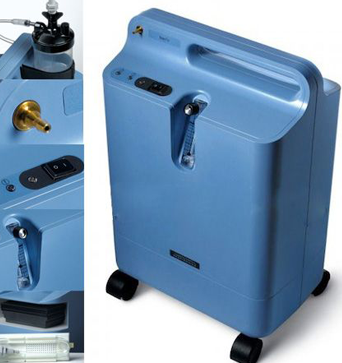
Oxygen concentrators and supply
Match oxygen flow, concentration, and pressure to the intended equipment. Plan power, backup supply, and maintenance alongside the concentrator.
How it works & what to compare
The basics
An oxygen concentrator takes in room air and produces oxygen-enriched gas. It needs electricity and maintenance. Its flow, concentration, and outlet pressure must match the planned use and connected equipment.
Before you buy
- Request concentration and flow verification for the offered unit under its specified conditions; confirm altitude, temperature, and humidity limits.
- Check outlet pressure and compatibility with any connected device. Do not assume a concentrator can power every ventilator or anesthesia workstation.
- Include filters, maintenance tools, oxygen-quality checks, replacement parts, and a qualified plan for backup supply and power outages.
Budget for the whole package. Compare the delivered system, electrical demand, maintenance, and supply continuity. Avoid judging value only by the maximum flow number on the front panel.
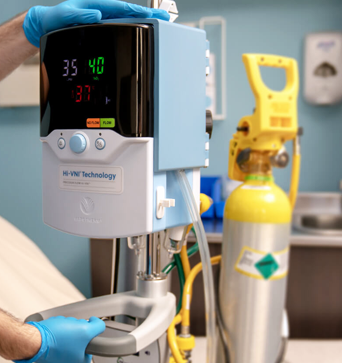
High-flow and noninvasive systems
Price the flow source, humidifier, compatible circuit, interface, and oxygen supply together. The unit alone does not establish a complete service.
How it works & what to compare
The basics
High-flow systems deliver warmed, humidified breathing gas through a nasal interface. Noninvasive ventilation provides breathing support through an interface such as a mask. They serve different clinical needs and are not interchangeable purchases.
Before you buy
- Confirm oxygen demand and source compatibility at the planned configuration; total gas flow and oxygen-source flow are not the same specification.
- Identify approved patient circuits, chambers, interfaces, water supplies, and cleaning equipment, including recurring local availability.
- Ask for model-specific manuals, service records, training, and the receiving team’s backup arrangements.
Budget for the whole package. Include the cost of complete patient kits and their replacement intervals from the manufacturer’s instructions. A bare unit can be inexpensive while its ongoing supplies are difficult to source.
Patient monitors
Compare enabled measurements and included modules, cuffs, and sensors. A feature shown on a display may require an extra accessory or license.
How it works & what to compare
The basics
A patient monitor displays selected measurements and alarms. What it can measure depends on the fitted modules, sensors, and accessories; a screen with empty parameter slots does not include every monitoring function.
Before you buy
- Require a list of enabled parameters, installed modules, compatible sensors, cuffs, cables, and adapters for each unit.
- Demonstrate the offered configuration, including alarms and battery operation, through the receiving biomedical team’s acceptance process.
- Verify central-station, network, and software compatibility before buying a group of monitors. Include mounting and charging accessories.
Budget for the whole package. Compare a complete working monitor package. Replacement sensors, proprietary cables, optional modules, and central software can be a substantial part of ownership cost.
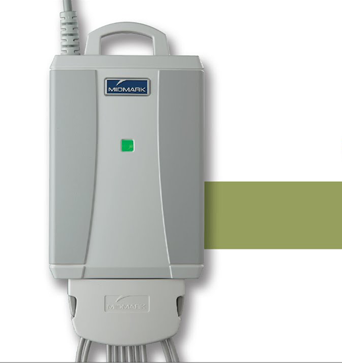
Diagnostic ECG systems
Decide how recordings will be reviewed, saved, and shared. Include patient leads, reporting software, computer requirements, and ongoing support.
How it works & what to compare
The basics
A diagnostic ECG records the heart’s electrical activity for clinical interpretation. The acquisition device, patient leads, software, and reporting system all matter, particularly with a computer-based unit.
Before you buy
- Confirm diagnostic lead acquisition, the complete patient cable, electrodes, and the required reporting functions with the clinical team.
- For used computer-based systems, establish software-transfer rights, supported computers, and whether optional connectivity needs an additional license.
- Request a representative report and a demonstration of saving, reviewing, exporting, and backing up recordings without patient-identifying sample data.
Budget for the whole package. Price the recorder or interface plus computer, software, accessories, printer, and ongoing support. An inexpensive hardware interface is incomplete without usable software.
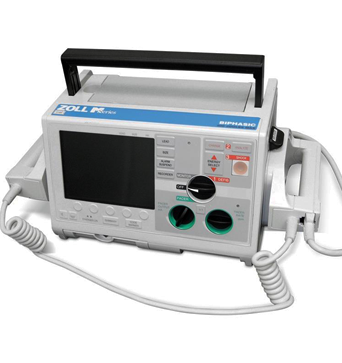
Defibrillators and AEDs
Match AED or manual functions to the intended users. Check battery condition, pad expiry, testing records, and service availability before comparing price.
How it works & what to compare
The basics
Defibrillators deliver an electrical shock for certain life-threatening heart rhythms. AEDs analyze the rhythm and give prompts; manual systems offer controls for trained clinical teams. Their intended users and functions differ.
Before you buy
- Ask for documented functional testing by qualified service personnel, battery-condition evidence, and the exact model and software version.
- Check compatible batteries, chargers, pads, cables, and expiry dates. Confirm which accessories are reusable and which are single-use from their instructions.
- Verify service availability, manufacturer notices, and any outstanding corrective actions for the serial number before accepting an older unit.
Budget for the whole package. Include replacement pads, batteries, testing, training, and scheduled service. Do not base an emergency-equipment decision on the cheapest untested unit.
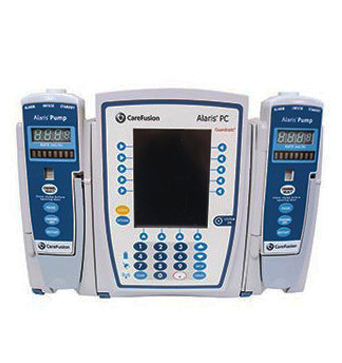
Infusion and syringe pumps
Check the supply of approved tubing or syringes before choosing a pump. Dedicated consumables can determine the long-term cost.
How it works & what to compare
The basics
Infusion pumps deliver fluids at controlled rates. A syringe pump drives a compatible syringe, while a volumetric pump uses an approved administration set. Those recurring supplies are part of the equipment decision.
Before you buy
- Obtain the manufacturer’s approved set or syringe list. Do not rely on a seller’s general claim that a pump accepts any tubing.
- Request documented delivery-performance and alarm checks, battery testing, maintenance history, and software or drug-library configuration.
- Calculate realistic ongoing set consumption and confirm local supply, lead times, shelf life, and an alternative procurement route.
Budget for the whole package. Compare pump, dock, battery, testing, software support, and recurring sets over the same period. A donated platform can be costly if its dedicated supplies are scarce.
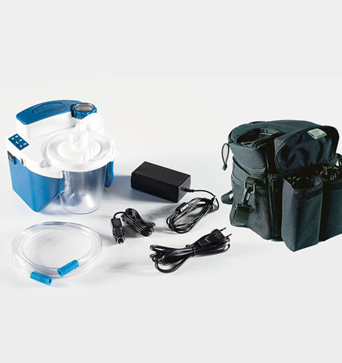
Portable and ward suction
Match vacuum, flow, duty cycle, and collection capacity to the work. Verify battery operation on the exact variant being offered.
How it works & what to compare
The basics
A suction unit creates vacuum to collect fluids through tubing and a collection container. The pump, canister, filters, and power supply need to suit the intended clinical application and operating pattern.
Before you buy
- Confirm specified vacuum range, flow performance, and duty cycle against the clinical team’s requirements; do not infer continuous operation from the unit’s size.
- Identify the correct canisters, lids, filters, tubing, overflow protection, and accessories, including their reuse or replacement instructions.
- Ask for functional testing, battery assessment where applicable, and a practical replacement-parts list.
Budget for the whole package. Include replacement filters and collection systems. Verify whether the exact variant includes a battery; similar product names can cover mains-only and battery versions.
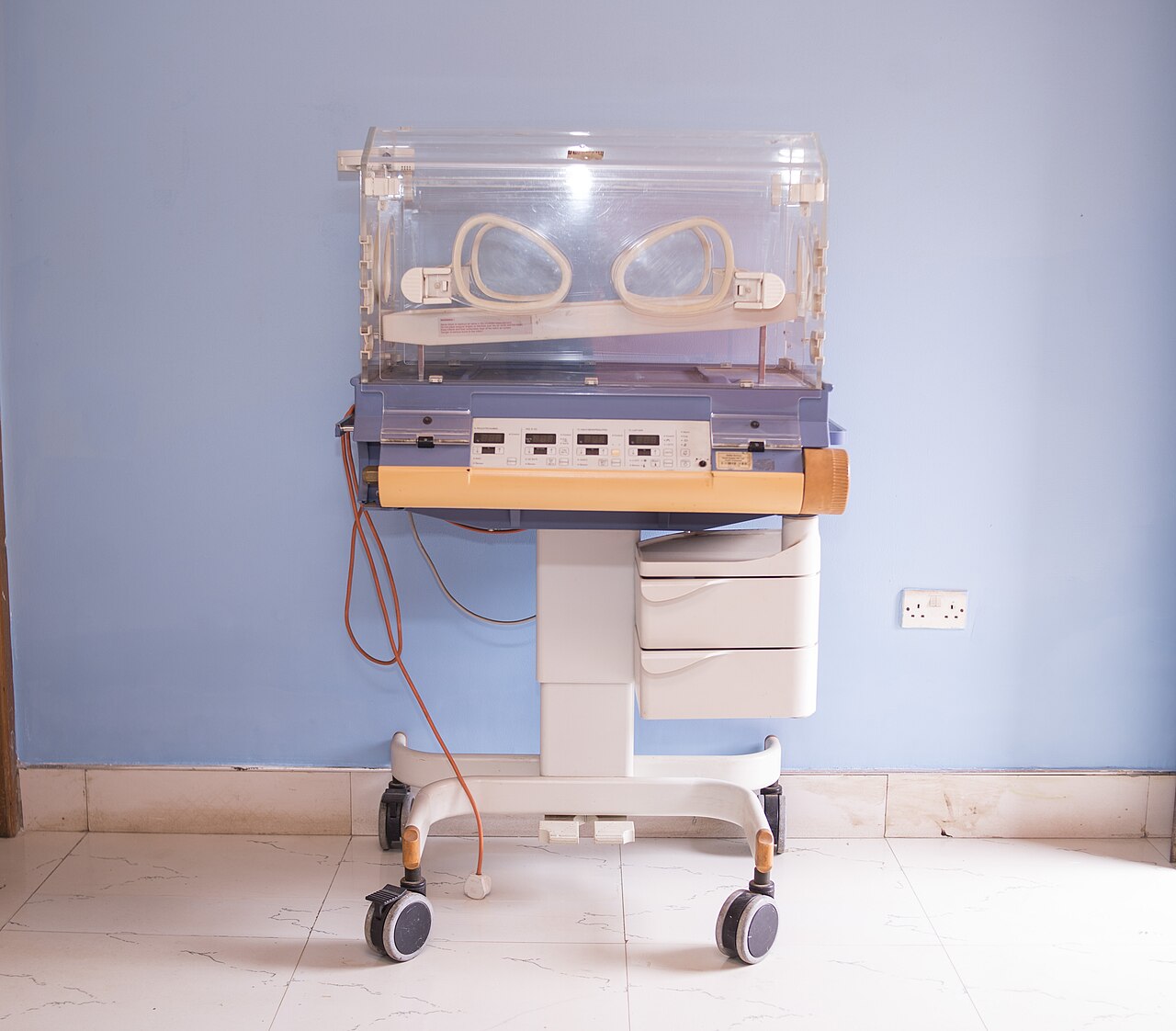
Maternal and neonatal equipment
Specify incubators, warmers, phototherapy, and fetal monitoring separately. Each needs its own accessories, performance checks, and service plan.
How it works & what to compare
The basics
Incubators and radiant warmers provide different ways to support an infant’s thermal environment. Phototherapy equipment delivers specified light for prescribed treatment, while maternal and fetal monitors perform separate monitoring roles.
Before you buy
- Itemize temperature probes, mattresses, scales, humidification components, mounts, and any optional features included with the offered unit.
- For incubators, request documented checks of temperature control, alarms, access panels, seals, and humidity functions where fitted.
- Ask the receiving team to define acceptance and cleaning requirements. For phototherapy, request output verification appropriate to the exact model, not just confirmation that its lights turn on.
Budget for the whole package. Include model-specific sensors, cleaning supplies, service, and replacement parts. Avoid mixing accessories from different generations without documented compatibility.
Your quote checklist
- Patient groups and functions approved by the clinical team
- Enabled options and exact compatible consumables
- Battery, alarm, and functional-test records
- Ongoing supplies, training, maintenance, and backup plan
References reviewed October 2, 2026.